
The Truth About Weight Loss
Understanding the Principles Before the Plans
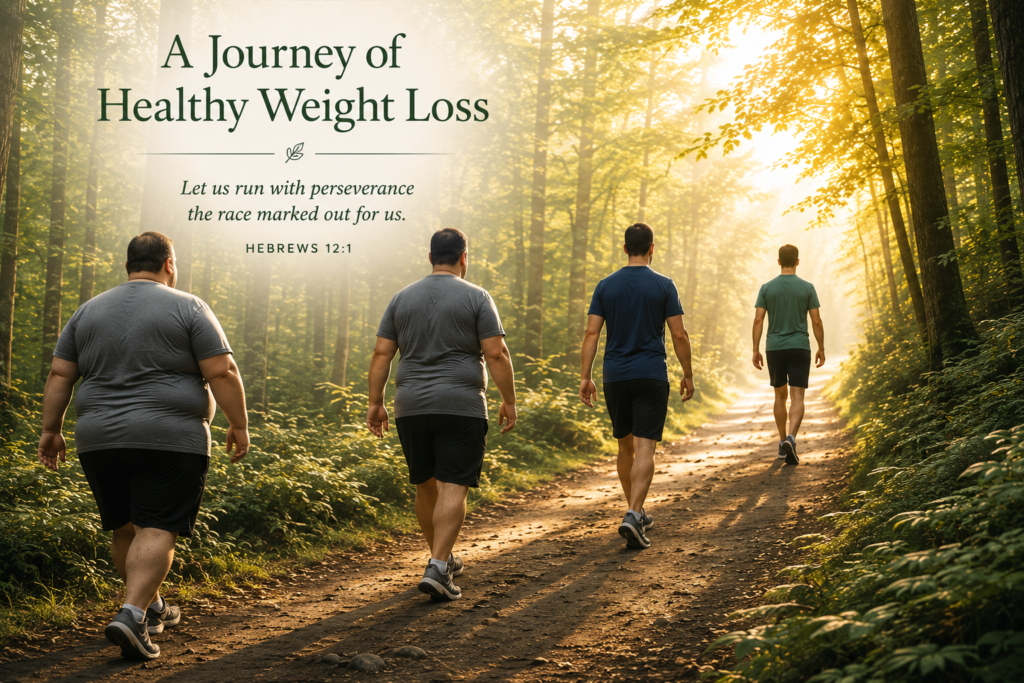
A Journey of Healthy Weight Loss
Lasting transformation happens through small, faithful steps practiced consistently over time.
Nutrition Truths
Nutrition is full of opinions.
Health is full of trends.
But truth doesn’t change.
Nutrition Truths explores what the best available scientific evidence actually shows—helping you separate enduring principles from popular myths so you can make wise, confident decisions for lifelong health.
What You'll Learn
- Why so many different diets appear to work.
- The principles every successful weight-loss approach has in common.
- Why understanding your body is more valuable than following nutrition trends.
- How this knowledge can help you make wise, confident decisions that support lifelong health.
Why Is Weight Loss So Confusing?
If you’ve ever tried to lose weight, you’ve probably encountered a frustrating reality.
One expert tells you to avoid carbohydrates. Another insists carbohydrates are essential. One program tells you to eat six small meals each day. Another says to skip breakfast. Some claim calories are all that matter. Others insist calories don’t matter at all.
Who should I believe?
Every year brings another bestselling book, another documentary, another celebrity-endorsed eating plan, and another promise that this diet has finally discovered the secret to lasting weight loss.
Yet despite all this advice, millions of people continue to struggle.
Perhaps you’ve experienced it yourself. You begin a new eating plan full of hope. For a few weeks the scale moves in the right direction. Then life becomes busy. Old habits slowly return. The weight comes back. Soon another diet promises better results, and the cycle begins again.
After enough disappointment, many people stop believing they can succeed. Others blame themselves, assuming they simply lack discipline.
But what if the problem isn’t your determination?
What if the problem is that we’ve been asking the wrong question?
Most people begin by asking:
“Which diet is the best?”
It sounds like the right question. But it isn’t.
The better question is:
“Why do so many completely different diets appear to work?”
That single question changes everything. Once you understand why diets work, you no longer need to chase every new nutrition trend. You begin to understand the principles that govern healthy weight loss—and principles endure long after diets come and go.
THE BIG IDEA
Every successful approach to healthy weight loss works by applying the same underlying biological principles. Diets are simply different ways of applying those principles.
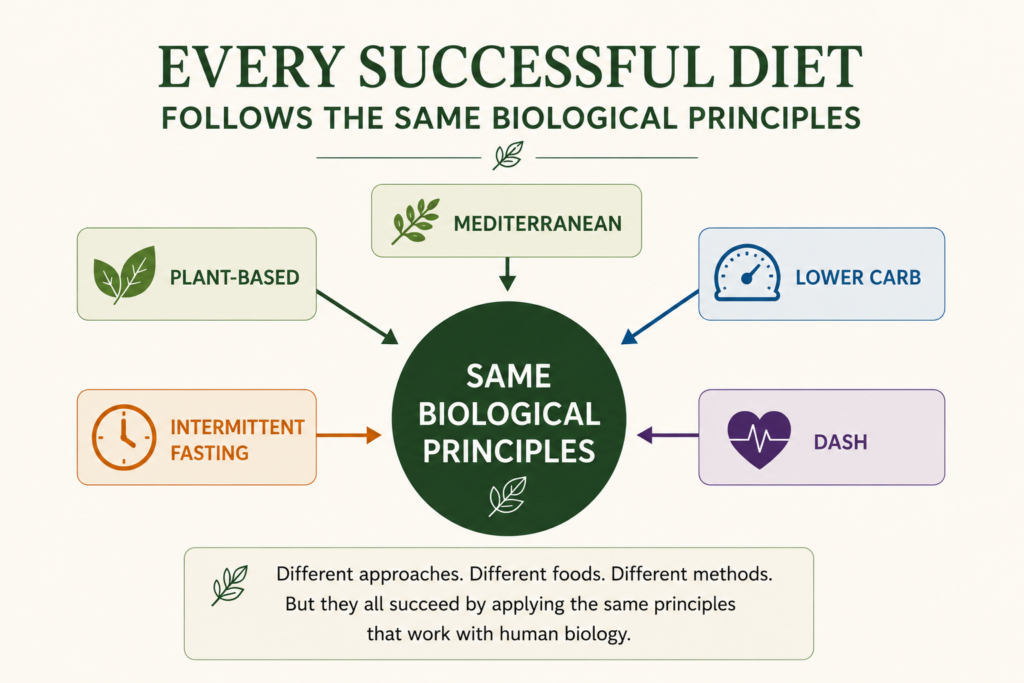
The Eight Principles of Healthy Weight Loss
These eight principles form the foundation of sustainable weight management.
Imagine trying to build a house without first understanding the purpose of its foundation. You might choose beautiful materials and faithfully follow someone else’s blueprint, but if the foundation is weak, the structure will always remain vulnerable.
Healthy weight loss works in much the same way.
Most people begin by choosing a diet. But a diet is simply one possible way of applying nutritional principles. The principles themselves are what matter.
Once you understand those principles, something remarkable happens. You stop asking, “Which diet should I follow?” and begin asking, “What principles is this approach built upon, and are those principles supported by the best available evidence?”
That shift—from following plans to understanding principles—is one of the most empowering changes you can make. It moves your attention away from marketing and toward understanding, away from trends and toward truth, and away from short-term fixes toward lifelong wisdom.
Once you understand how your body works, you are no longer dependent on the latest nutrition trend to tell you what to do. You become equipped to evaluate nutrition advice with confidence, wisdom, and discernment.
And that is exactly what this chapter is designed to help you do.
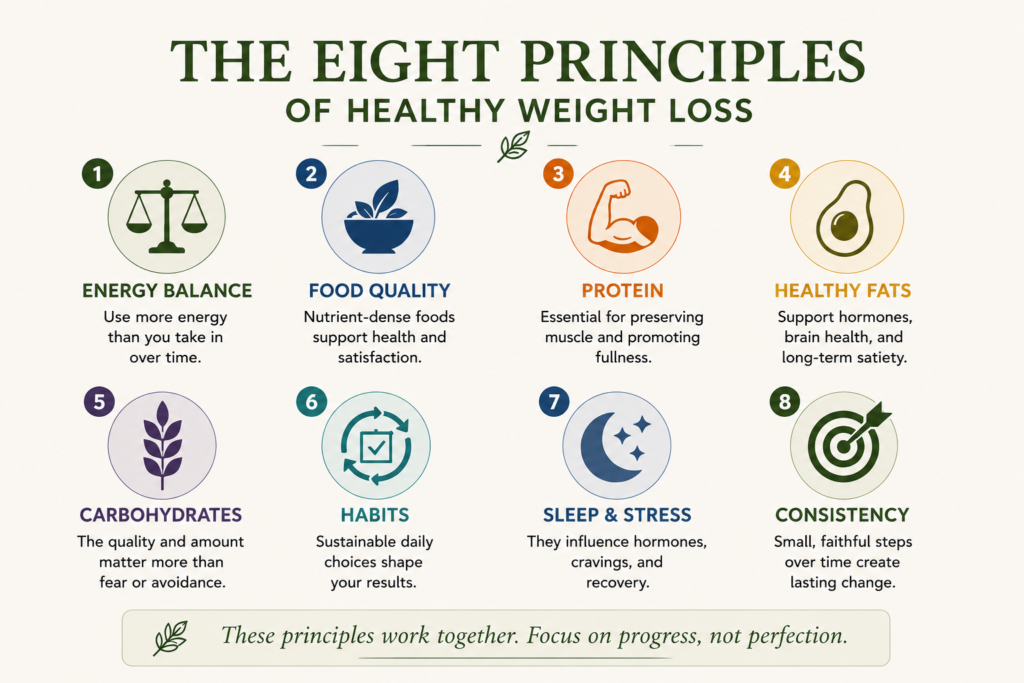
Every Successful Diet Follows the Same Biological Principles
Different eating patterns recommend different foods, but sustainable success is built on the same biological principles.
Every Successful Diet Follows the Same Principles
At first glance, many popular diets seem completely different from one another.
Some encourage eating very few carbohydrates. Others emphasize reducing fat. Some focus on portion control. Others restrict eating to certain hours of the day. Some are built around whole foods, while others simply ask you to count calories.
Because these approaches appear so different, it is easy to assume they work for different reasons.
Although these eating patterns vary in their rules, they succeed by applying many of the same underlying biological principles. The names change. The marketing changes. The meal plans change. But the physiology of the human body does not.
Rather than becoming loyal to a particular diet, you can become confident in the principles that support healthy weight loss regardless of the eating pattern you choose.
Principle 1: Energy Balance Matters
If there is one principle that every successful weight-loss approach has in common, it is this: over time, the body uses more energy than it receives from food.
This is known as a calorie deficit.
The human body requires energy to perform every function necessary for life—from breathing and maintaining body temperature to thinking, walking, exercising, and repairing tissues. That energy comes from the foods and beverages we consume.
When energy intake consistently exceeds energy expenditure, the body stores the excess energy, primarily as body fat. When energy expenditure consistently exceeds energy intake, the body must draw upon its stored energy reserves to meet its needs. Over time, this results in the loss of body fat.
This principle is not a diet. It is human physiology.
Whether someone follows a Mediterranean diet, a well-planned plant-based diet, a lower-carbohydrate approach, intermittent fasting, or another balanced eating pattern, fat loss occurs when a sustained calorie deficit is created.
The diet itself is not causing fat loss through a unique biological mechanism. Rather, it is helping the individual achieve a calorie deficit in a way they can maintain.
Calories matter. But they are not the whole story.
Two people may consume the same number of calories and experience very different levels of hunger, satisfaction, energy, and long-term success depending on the quality of those calories, the amount of protein they consume, the types of foods they eat, their sleep, stress, activity level, and many other factors.
The calorie deficit explains why weight loss occurs. The remaining principles help explain how to make that deficit healthy, sustainable, and realistic over the long term.
Principle 2: Food Quality Influences Success
Not all calories are experienced the same way by your body—or by your appetite. While weight loss ultimately requires a calorie deficit, the foods you choose strongly influence how easy—or how difficult—it is to maintain that deficit.
Not all foods affect hunger, fullness, and nutrient intake in the same way.
Some foods promote fullness, provide essential nutrients, and help maintain steady energy. Others are easy to overconsume because they are highly processed, energy-dense, and less satisfying.
Imagine trying to reduce your calorie intake while constantly feeling hungry. Technically, it is possible. Practically, it becomes much more difficult.
Eating patterns rich in vegetables, fruits, whole grains, legumes, lean proteins, nuts, seeds, and minimally processed foods often provide greater volume, more fiber, more nutrients, and better satiety relative to their calorie content.
This does not mean individual foods are simply “good” or “bad,” nor does it mean you must eat perfectly. It means food quality matters because it influences hunger, satisfaction, nutrient intake, and ultimately your ability to maintain healthy habits over time.
Healthy eating is not simply about eating fewer calories. It is about nourishing your body well while creating an eating pattern you can realistically sustain.
KEY INSIGHT
Weight loss isn’t just about losing fat. It’s about preserving the muscle, strength, and health that help you flourish.
Principle 3: Protein Helps Protect What You’re Trying to Keep
Weight loss isn’t just about losing weight. It’s about preserving health.
When people think about losing weight, they often focus entirely on what they hope to lose: body fat.
But there is something equally important that we want to preserve: lean body mass.
Muscle plays a vital role in strength, mobility, physical function, metabolic health, and healthy aging. During weight loss, the body can lose both fat and lean tissue if nutritional needs are not adequately met.
Consuming adequate protein during weight loss helps preserve muscle mass, supports recovery, increases feelings of fullness, and may make long-term weight management easier.
Protein is not a magic solution. But it is one of the most valuable nutritional tools available during a healthy weight-loss journey.
Rather than asking, “How little can I eat?” a better question is: “Am I providing my body with what it needs while reducing excess energy intake?”
That shift reflects the difference between simply dieting and intentionally caring for the body.
Principle 4: Healthy Fats Support Satisfaction and Health
Many people trying to lose weight fear dietary fat. Ironically, healthy fats can actually make healthy eating easier.
For many years, dietary fat was viewed with suspicion. Because fat contains more calories per gram than carbohydrates or protein, many people assumed that eating less fat was the key to losing weight.
Today, we know the picture is more nuanced.
Healthy fats are necessary for the absorption of fat-soluble vitamins, help build healthy cell membranes, support hormone production, contribute to brain function, and can increase the enjoyment and satisfaction of meals.
A meal that contains an appropriate amount of healthy fat is often more satisfying than one that is almost entirely fat-free. Feeling satisfied after a meal can make it easier to avoid unnecessary snacking and overeating later in the day.
This does not mean that more fat is always better. Because fat is energy-dense, portion size still matters.
Foods such as avocados, nuts, seeds, olives, olive oil, and fatty fish can provide nourishment and satisfaction while contributing important nutrients that support long-term health.
The goal is not to fear fat. The goal is to understand its role and include it wisely.
Principle 5: Carbohydrates Are Not the Enemy
Few nutrition topics have created more confusion than carbohydrates.
Some diets portray carbohydrates as the primary cause of weight gain and encourage people to eliminate them almost entirely. Others promote carbohydrates as the foundation of a healthy eating pattern.
The evidence points toward a more balanced conclusion.
Carbohydrates are an important source of energy, particularly for the brain and during moderate- to high-intensity physical activity. Many carbohydrate-rich foods—including fruits, vegetables, legumes, and whole grains—also provide fiber, vitamins, minerals, and beneficial plant compounds.
Like any nutrient, the source matters. A bowl of oats and a sugary soft drink are both sources of carbohydrate, yet they differ dramatically in nutritional value, fiber content, satiety, and their contribution to a healthy eating pattern.
Weight gain is not caused simply by eating carbohydrates. It occurs when energy intake consistently exceeds the body’s energy needs.
Many people lose weight on lower-carbohydrate diets because these patterns often reduce overall calorie intake, increase protein intake, simplify food choices, or help some individuals control their appetite. Others achieve equally meaningful results while including moderate or relatively high amounts of carbohydrates as part of a balanced diet.
The common factor is not the elimination of carbohydrates. It is adherence to sound nutritional principles over time.
Healthy nutrition is not about fearing carbohydrates. It is about understanding which carbohydrate-rich foods nourish the body and how they fit within a balanced dietary pattern.
Principle 6: Habits Matter More Than Motivation
Motivation can get you started. Habits keep you going.
Most people begin a weight-loss journey highly motivated. They have reached a turning point, made a decision, and feel excited to change.
Motivation is a wonderful way to begin. But it is a poor strategy for finishing.
Motivation naturally rises and falls. Some days you feel energized and disciplined. Other days life becomes stressful, schedules change, unexpected events arise, or old routines quietly return.
If success depends entirely on motivation, progress often becomes inconsistent. Healthy habits, however, can continue long after motivation fades.
Habits reduce the number of decisions we must make each day. Preparing meals in advance, keeping nutritious foods available, walking after dinner, drinking enough water, and maintaining a consistent sleep schedule may seem like small actions, but repeated consistently they can produce meaningful long-term results.
Highly restrictive diets often rely on extraordinary effort that becomes increasingly difficult to maintain. Healthy habits become part of everyday life and gradually require less deliberate willpower.
Lasting transformation is rarely built through dramatic changes. It is usually built through small, faithful choices repeated over time.
Principle 7: Sleep and Stress Influence Weight Loss
Sometimes the biggest obstacle to weight loss isn’t what’s on your plate—it’s what’s happening in your life.
When people struggle to lose weight, they often assume the solution is simply to eat less and exercise more. Nutrition and physical activity are important, but they are not the only factors that influence body weight.
Sleep and stress also matter.
Sleep affects appetite regulation, energy balance, recovery, and decision-making. Inadequate sleep is associated with increased hunger, greater food cravings, reduced self-control, and a higher likelihood of choosing energy-dense foods.
When people are tired, healthy choices often become more difficult—not because they suddenly lack character, but because fatigue affects the body’s normal regulatory systems.
Chronic stress can influence eating behavior in similar ways. Many people eat not because their bodies need nourishment, but because food temporarily provides comfort, distraction, or relief from emotional strain.
This is not simply a matter of willpower. It reflects the complex relationship between the brain, hormones, emotions, and behavior.
Improving sleep and managing stress do not eliminate the need for a calorie deficit. But they can make that deficit much easier to create and maintain.
Healthy weight loss is not simply about changing what is on your plate. It is also about caring for the whole person.
Principle 8: Consistency Always Beats Perfection
Perfection has probably sabotaged more weight-loss journeys than birthdays ever have.
Perhaps the greatest obstacle to long-term success is the belief that healthy eating requires perfection.
Many people unknowingly adopt an all-or-nothing mindset. They eat perfectly on Monday. By Wednesday they enjoy an unexpected dessert or miss a workout. By Thursday they feel as though they have failed. By the weekend they have abandoned the entire plan, promising themselves they will start over next Monday.
But healthy weight management has never required perfection. It requires consistency.
Imagine two people beginning the same journey. One follows a highly restrictive eating plan perfectly for three weeks before giving up. The other follows a balanced pattern most of the time, enjoys occasional celebrations without guilt, learns from setbacks, and continues making healthy choices month after month.
The second person has built something more valuable than perfect compliance: sustainability.
Healthy living is not measured by one meal, one day, or even one week. It is measured by the direction of your life over months and years.
There will be birthdays, holidays, vacations, stressful seasons, and moments when healthy choices are harder than usual. These moments do not define your journey.
What matters most is returning to the principles that support health rather than allowing a temporary setback to become permanent surrender.
Consistency does not demand perfection. It simply asks you to faithfully continue.
Plans Come and Go. Principles Endure.
Nutrition advice changes remarkably quickly.
One decade dietary fat becomes the villain. The next decade carbohydrates take its place. One year a particular eating pattern dominates headlines. A few years later it is replaced by another.
Food products appear with bold promises. Supplements become overnight sensations. Social media fills with confident voices insisting they have discovered the missing secret to weight loss.
For someone trying to improve their health, the constant stream of conflicting advice can be exhausting.
Yet beneath all the changing headlines, something much more stable remains.
Human physiology has not changed. The body still responds to energy balance. Nutritious foods still nourish the body. Adequate protein still supports lean body mass. Healthy fats continue to play essential roles. Carbohydrates remain an important source of energy. Sleep, stress, physical activity, and daily habits still influence health and body weight.
The principles remain remarkably consistent. The plans simply package those principles in different ways.
This realization is freeing. You no longer need to chase every new trend. Instead, you can evaluate new ideas by asking:
“Does this approach apply sound nutritional principles in a way that is healthy, balanced, and sustainable?”
If the answer is yes, it may be worth considering. If the answer is no, its popularity is largely irrelevant.
Understanding principles gives you something far more valuable than another diet. It gives you discernment.
And discernment is one of the greatest gifts that education can provide.
A Balanced Perspective
By now, you may be wondering which eating pattern is best.
The honest answer is that there is no single dietary approach that is right for every person.
People can achieve healthy weight loss through a variety of well-designed eating patterns. Some thrive on a Mediterranean-style diet. Others succeed with a lower-carbohydrate approach. Some prefer a well-planned plant-based diet, while others find that structured meal planning or time-restricted eating fits their lifestyle.
The common thread is not that one approach is universally superior. The common thread is that each applies the same underlying principles in a way the individual can maintain.
This is why nutrition should never become a matter of tribal loyalty. Our goal is not to defend a particular diet. Our goal is to understand the principles that allow people to flourish.
A healthy eating pattern should do more than help someone lose weight. It should provide adequate nutrition, support physical and mental health, and fit within a person’s culture, family life, preferences, and medical needs.
Perhaps most importantly, it should be sustainable.
The best eating plan is not the one you can follow for thirty days. It is the one that helps you faithfully care for your body for many years to come.
Success is not measured only by how quickly the number on the scale changes. It is also measured by whether the habits you are building today are moving you toward better health tomorrow.
It is not about pursuing perfection. It is about making wise decisions consistently.
And it is not about finding the perfect diet. It is about faithfully applying sound principles over a lifetime.
Instead of asking whether a particular food is simply “good” or “bad,” begin asking better questions: Does this nourish my body? Does it fit within a balanced eating pattern? Is this a choice I can realistically sustain?
These questions lead to wisdom. And wisdom almost always leads to better decisions than fear.
Looking Ahead
Understanding these principles is only the beginning.
Throughout this chapter, we have intentionally focused on the foundations of healthy weight loss rather than the details of any particular eating plan. Before choosing a strategy, it is essential to understand the principles that make every successful strategy work.
Now we are ready to explore those principles in greater depth.
- Why is a calorie deficit necessary for fat loss, and why is it not the whole story?
- How does food quality influence hunger, satisfaction, and long-term success?
- Why is protein so important during weight loss?
- Are carbohydrates really the enemy?
- What role do healthy fats play in a balanced eating pattern?
- How do ultra-processed foods influence health and appetite?
- Why do sleep, stress, and daily habits often determine long-term success?
Each chapter builds upon the one before it. Together they form a framework for understanding nutrition grounded in evidence rather than trends, principles rather than opinions, and wisdom rather than quick fixes.
Nutrition Takeaways
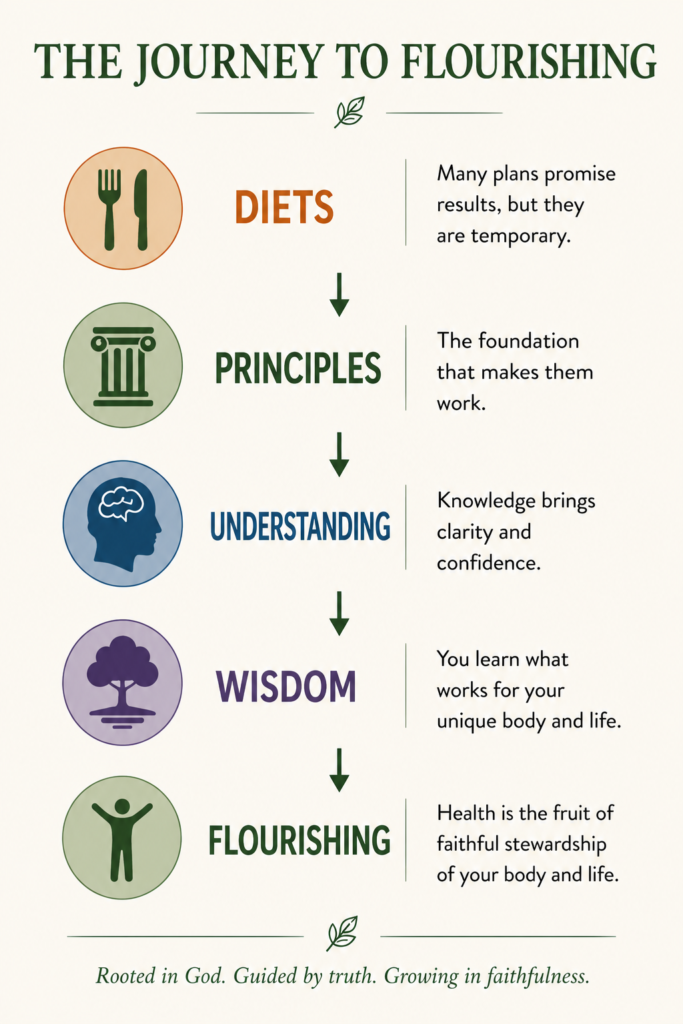
The Journey to Flourishing
Understanding leads to wisdom. Wisdom leads to faithful stewardship. Faithful stewardship leads toward flourishing.
- Healthy weight loss is built on enduring biological principles, not popular diet trends.
- A sustained calorie deficit is necessary for body fat loss.
- Food quality influences hunger, satisfaction, nutrient intake, and long-term success.
- Adequate protein helps preserve lean body mass during weight loss.
- Healthy fats play essential roles in nutrition and can increase meal satisfaction.
- Carbohydrates are an important source of energy and can be part of a healthy weight-loss plan.
- Sleep, stress, and daily habits significantly influence your ability to maintain healthy behaviors.
- Consistency is more important than perfection.
- The best dietary pattern is evidence-based, nutritionally adequate, appropriate for your individual needs, and sustainable over the long term.
- Understanding principles gives you the confidence to evaluate nutrition advice wisely rather than chasing every new trend.
🌱 Wisdom for the Journey
Weight loss is often presented as a race to reach a number on a scale. But lasting health is not built through short bursts of effort. It is built through faithful stewardship.
Your body is remarkably designed. The more you understand how it works, the better equipped you become to care for it wisely.
There will always be new diets, new headlines, and someone promising a faster solution. But truth is not determined by popularity. The principles that support health remain remarkably consistent.
As you continue this journey, resist the temptation to chase every new promise. Instead, invest your energy in understanding your body, developing healthy habits, and making wise decisions you can faithfully practice for years to come.
Healthy living is not about becoming perfect. It is about becoming a wiser steward of the life and body you have been entrusted with.
That journey is not measured by one meal, one week, or even one season. It is measured by the quiet faithfulness of choosing what is good, again and again, over a lifetime.
🌿 Take One Faithful Step
One small step is enough.
Don’t try to change your entire diet today.
Instead, ask yourself one simple question:
What is one way I can nourish my body well today?
Perhaps it’s drinking more water.
Adding something nourishing to your next meal.
Preparing food instead of reaching for the easiest option.
Taking a short walk.
Getting to bed a little earlier.
Choose one.
Not because one small choice will transform your health overnight.
But because flourishing rarely begins with changing everything.
It often begins with faithfully caring for the next thing in front of us.
Take one faithful step.
Then tomorrow, take another.
🚶 Continue the Journey
The journey continues…
Now that you understand the principles underlying every successful approach to weight loss, the next question naturally follows:
“If a calorie deficit is necessary for fat loss, why isn’t simply eating fewer calories always enough?”
In the next chapter, we will explore one of the most misunderstood concepts in nutrition:
We will discover why two diets containing the same number of calories can produce very different experiences—and why understanding the quality of those calories is essential for achieving lasting health.
